

What to Do When Readers Guess Instead of Decoding
I recently noticed this issue with my own daughter while reading at home. When she came to an unfamiliar word, she wasn’t slowing down to decode it. Instead, she guessed and kept going. She’s a strong first grade reader, but in her effort to get through her work quickly, she started cutting corners.
This kind of guessing is very common with early readers. If it isn’t addressed early, it can quietly turn into a habit that’s hard to break and can interfere with strong decoding skills down the road.
Common Signs of Guessing
Guessing can be easy to miss at first, especially because many students who guess sound confident when they read. But there are a few common signs that can help you notice when a student is starting to rely on guessing instead of decoding.

- Looking at the pictures before the word. The student pauses and checks the illustration instead of looking closely at the letters to decode the word.
- Substituting a word based on the first sound or letters. For example, reading crunch instead of crack because the word starts the same way.
- Using a word that fits the sentence but doesn’t match the print. This might sound like saying truck for tractor without reading the whole word.
- Saying a word very quickly without sounding it out. This often happens with unfamiliar words and sounds more like a guess than a careful read.
- Giving different guesses on repeated reads. The student says a different word each time they come to the same word.
- Looking at the teacher instead of the text. Some students glance up to check your facial expression to see if their guess was correct.
Not every mistake means a student is guessing. But when you start to notice several of these patterns showing up together, it’s usually a sign that decoding habits need some reinforcement.
Why Students Guess

Guessing is a common reading behavior, and it usually has less to do with effort and more to do with instruction and habits that develop over time.
- Confusion between decodable words and sight words. When too many sight words, heart words, or rule breakers are introduced too early, students can become unsure about when to use phonics and when to memorize. Over time, this can teach them not to fully trust the phonics rules they’re learning.
- Pressure to read quickly. Many students feel rushed during reading or fluency practice. When speed becomes the goal, students are much less likely to slow down and carefully sound out unfamiliar words.
- Using context as a shortcut. Guessing from pictures, first letters, or sentence context is often faster than decoding, especially when students are tired, distracted, or overwhelmed. Over time, this teaches students to look away from the word instead of using the letters and sounds, which weakens true decoding habits.
- Habit formation. When guessing leads to a correct word, even by chance, that behavior gets reinforced. Before long, guessing becomes automatic and harder to break.
- Strong memory and bright students. Some students memorize simple books and use context so well that it looks like fluent reading. This can easily mask decoding gaps and make guessing harder to notice.
How to Correct and Redirect Guessing
When you notice a student guessing, it helps to address it right away before it turns into a habit. The goal isn’t to call it out, but to gently guide the student back to the word and reinforce good decoding habits.

- Slow the reader down. Many students guess because they feel rushed. Giving permission to slow down helps them take the time they need to decode carefully.
- Bring the focus back to letter sounds. Point to the letters and walk the student through sounding out the word. Keep the attention on what the letters are doing, not what might make sense in the sentence.
- Cover part of the word if needed. If a word feels overwhelming, cover part of it so the student can focus on decoding one chunk at a time before blending the whole word.
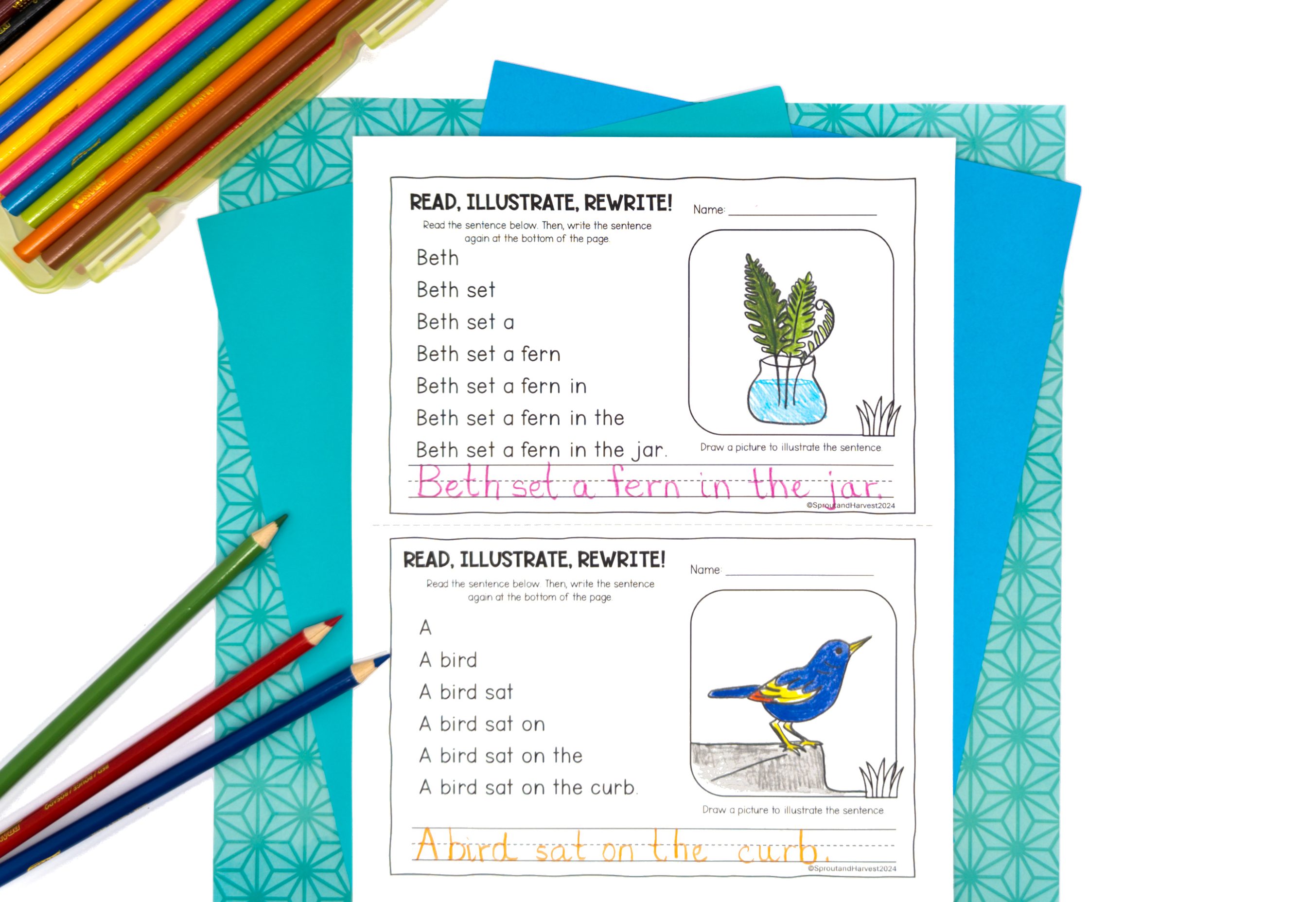
- Reduce visual cues. Use texts or worksheets without pictures, or simply cover the picture. This removes the temptation to guess from context and keeps the focus on the print.
- Practice with single words. Flashcards or worksheets with individual words are especially helpful when introducing a new phonics concept. Without sentence or picture clues, students have to rely on decoding.
Redirecting guessing takes consistency, but small adjustments like these can make a big difference in helping students build stronger habits and more confidence as readers.
Instructional Shifts That Reduce Guessing

One of the best ways to reduce guessing is to prevent it from becoming a habit in the first place. Small shifts in how reading instruction is set up can go a long way.
- Use truly decodable texts. Choose texts that only include phonics patterns your students have already been taught. When students see words they can actually decode, they’re more likely to rely on letter–sound knowledge instead of guessing.
- Be thoughtful about sight words. Limiting the number of sight words students are expected to memorize helps keep the focus on decoding. Too many sight words too early can blur the line between phonics-based reading and guessing from memory.
- Practice new skills with single words first. Before moving students into phrases or sentences, use flashcards or single-word practice to make sure they can decode a new phonics pattern accurately. This is especially helpful for quick checks and assessments.
- Reduce reliance on pictures. Texts and worksheets without pictures, or with covered images, help students keep their eyes on the print. This removes an easy path to guessing and reinforces decoding as the main strategy.
- Use nonsense words. Asking students to read made-up words like zib, thob, or gusp helps confirm that they’re truly using letter sounds. Without meaning or context, students have to rely on decoding.
Small instructional shifts like these create an environment where decoding is the expected and supported strategy, making guessing less likely over time.
Focus on Habits, Not Speed

In the end, it helps to focus on habits rather than speed. It’s easy to celebrate fast readers, but accuracy and strong decoding habits matter much more, especially in the early stages of reading. Watching for early signs of guessing and addressing them right away can prevent those habits from becoming ingrained.
With consistent practice and gentle reminders to slow down and use letter sounds, guessing can fade. As strong decoding habits take hold, fluency will grow naturally right alongside them.
Wondering where sight word memorization fits into all of this? I dive into that question here: Should Early Readers Memorize Words? →
Image credits: Photos are from my personal collection or sourced from Freepik.
References
National Reading Panel. (2000). Teaching Children to Read: An Evidence-Based Assessment of the Scientific Research Literature on Reading and Its Implications for Reading Instruction.
➡️ https://www1.nichd.nih.gov/publications/pubs/nrp/documents/report.pdf NICHD
Reading Rockets. Report of the National Reading Panel: Teaching Children to Read.
➡️ https://www.readingrockets.org/resources/resource-library/report-national-reading-panel-teaching-children-read Reading Rockets
Ehri, L. C. (2014). Orthographic Mapping in the Acquisition of Sight Word Reading, Spelling Memory, and Vocabulary Learning.
➡️ https://eric.ed.gov/?id=EJ1027413 ERIC
Reading Rockets. Sight Words and Orthographic Mapping.
➡️ https://www.readingrockets.org/reading-101/reading-and-writing-basics/sight-words-and-orthographic-mapping Reading Rockets
Put Reading First: The Research Building Blocks for Teaching Children to Read (Third Edition).
➡️ https://lincs.ed.gov/publications/pdf/PRFbooklet.pdf LINCS
National Reading Panel publications via NICHD (executive summaries).
➡️ https://www.nichd.nih.gov/publications/pubs/nrp/findingsNICHD






Leave a Reply